Text and photos by William Ritter

As the leaves begin to fall and cold weather (sort of) begins to set in, pumpkin pies, pumpkin soups, and pumpkin ales start popping up on menus across the state. Historically, though, many western North Carolina families let the pumpkins go to the hog pen, and it was candyroaster squash that graced the table instead. Don’t get me wrong, I love a pumpkin pie, but the orange flesh of a candyroaster is sweet and absolutely full of flavor. Compared to candyroasters, most pumpkins are unsweet tea.
Candyroasters, like many other traditional mountain crops such as October and greasy beans, were first grown by the Cherokee. Visit the Annual Cherokee Indian Fair and you will find beautiful, not mention large, examples of the cucurbita maxima squash. But the variety of winter squash exhibited at the fair showcases only few types of candyroasters. Perhaps one indicator of the pie squash’s long tenure in Southern Appalachia can be found in its diversity. Over time, so many different types have been developed and maintained by farming families that there is no consensus on what a candyroaster actually looks like. Many of the old-timers I have talked to across Western North Carolina offer different ideas of what the fabled squash looks like. Some described it as green and banana shaped, others as more like a flattened pumpkin, others still felt that it should be oval shaped with bumpy skin. Dr. Jim Veteto, an anthropologist and expert on Appalachian seed-saving, has identified over forty distinct varieties of “candyroasters” in Western North Carolina. These types include: the “blue candyroaster,” the “green and white candyroaster,” the “roughbark candyroaster,” and the “little Cherokee candyroaster.”
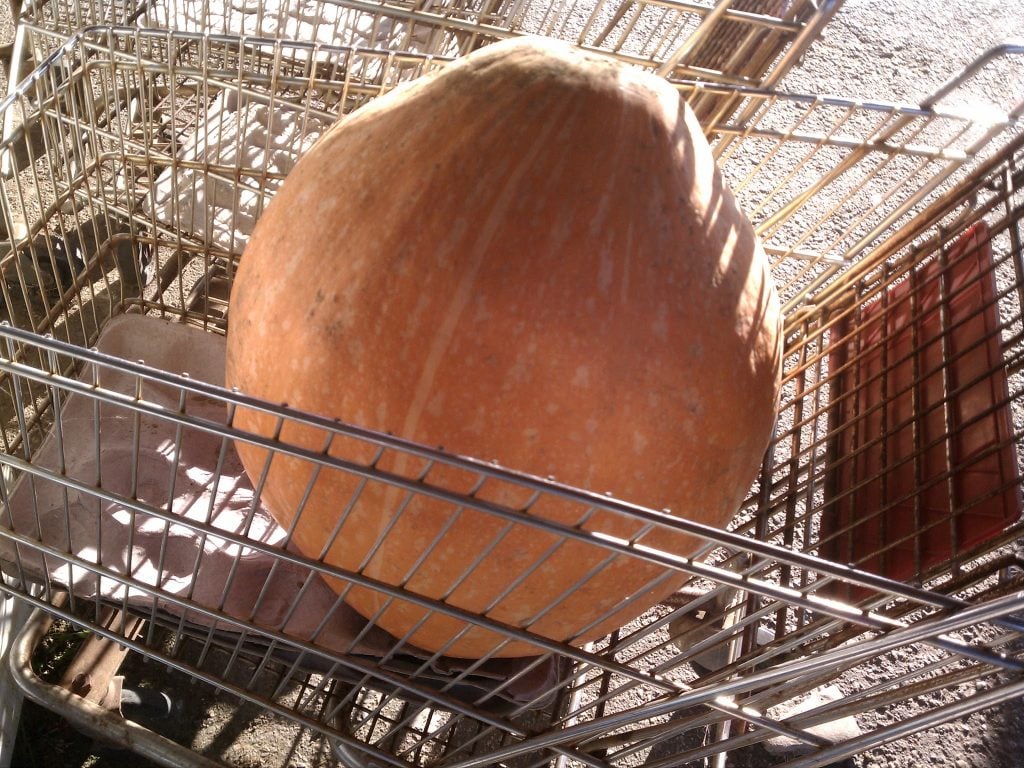 The one thing everyone seems to agree on with candyroasters is the unparalleled taste. I have made killer pies, soufflés, breads, and more out of candyroasters, but I particularly like using my mother’s recipe for “pumpkin chili.” If you can get ahold of them, I recommend cooking down some “shellie october beans” to replace the can of Northern Beans, get some old-timey “multiplier onions,” and use a nice “oxheart” tomato.
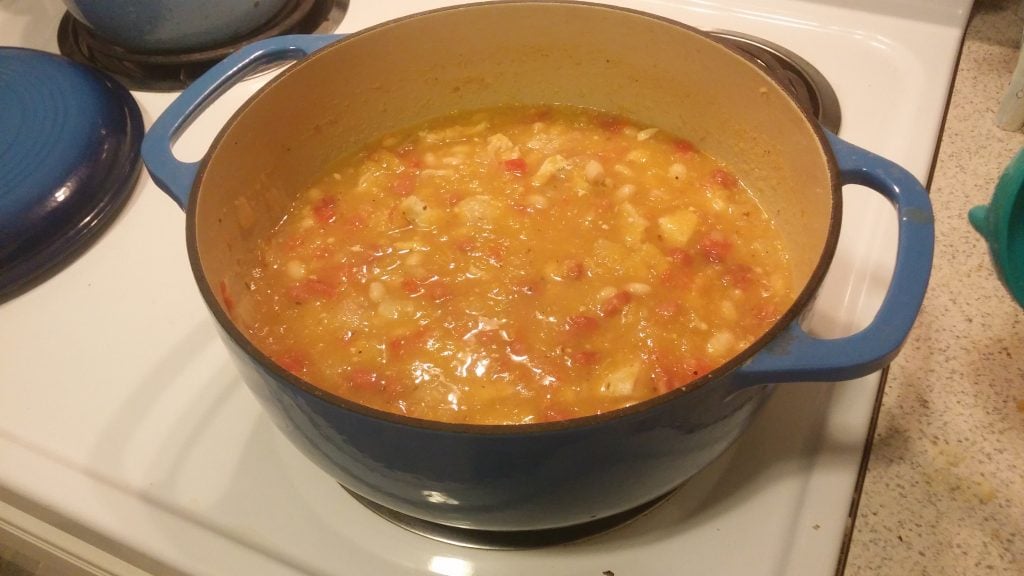
Candyroaster Chili
Take 2 large chicken breasts and half of 1 large chopped up onion, place into dutch oven with 3-4 tbs. olive oil. Cover and cook until no longer pink. Chop chicken and return to pot.
Add:
2 cups cooked candyroaster
1 cup great northern beans or cranberry beans
2 cups chopped veggies (whatever you have)
12 oz. can of chopped tomatoes
1 tsp cumin
Salt and pepper to taste
Simmer for 30 min covered, stir often.
Top the soup with sour cream and cheddar cheese.
Cooking down the Squash
Most candyroaster varieties are rather large, so processing them can really be a bear. I scoop out the seeds and cut up the candyroaster into smaller pieces; then I use an electric turkey roaster to cook it down. It sometimes takes me a few days on big squash, as I have to cook it a section at a time. At that point you can simply scoop the flesh off of the skin and freeze it in large mason jars or can it.