For custom furniture maker Evan Berding, dogma is the most dangerous thing in the world. His clients—who sit on a year-long wait list in order to fill their homes with Evan’s classically inspired yet remarkably original pieces—seem to agree. Evan’s design sensibility reflects rigorous discipline and a deep curiosity that make his ever-evolving work simultaneously refreshing and comforting.
Growing up in Roanoke, Virginia, the Durham-based furniture maker recalls a few special pieces of custom furniture that his parents commissioned for his childhood home—a deeply rooted memory that he speculates may have had a subtle influence on his creative trajectory. However, Evan’s official path to woodworking didn’t start until he found a furniture-making class at a community college while living in Seattle as a young adult. The classes gave him basic familiarity with tools and equipment, but a year and a half of crude open shop construction later, Evan was hungry for more in-depth training.
He sent out emails to local furniture makers, hoping to find one that would take him on as an apprentice, and got lucky. His apprenticeship only lasted a year, but it was an important opportunity for repetition of his craft. Like a musician, Evan says, “I put a lot of time into practicing my scales.”
After leaving the apprenticeship, Evan paid for rent and studio space by waiting tables and eventually was able to earn money from his woodworking jobs. Encouraged by his moderate commercial success and searching for new professional direction, Evan decided to take the plunge. He applied to a two-year furniture making program at the North Bennet Street School, the oldest craft school in the United States, in Boston, Massachusetts.
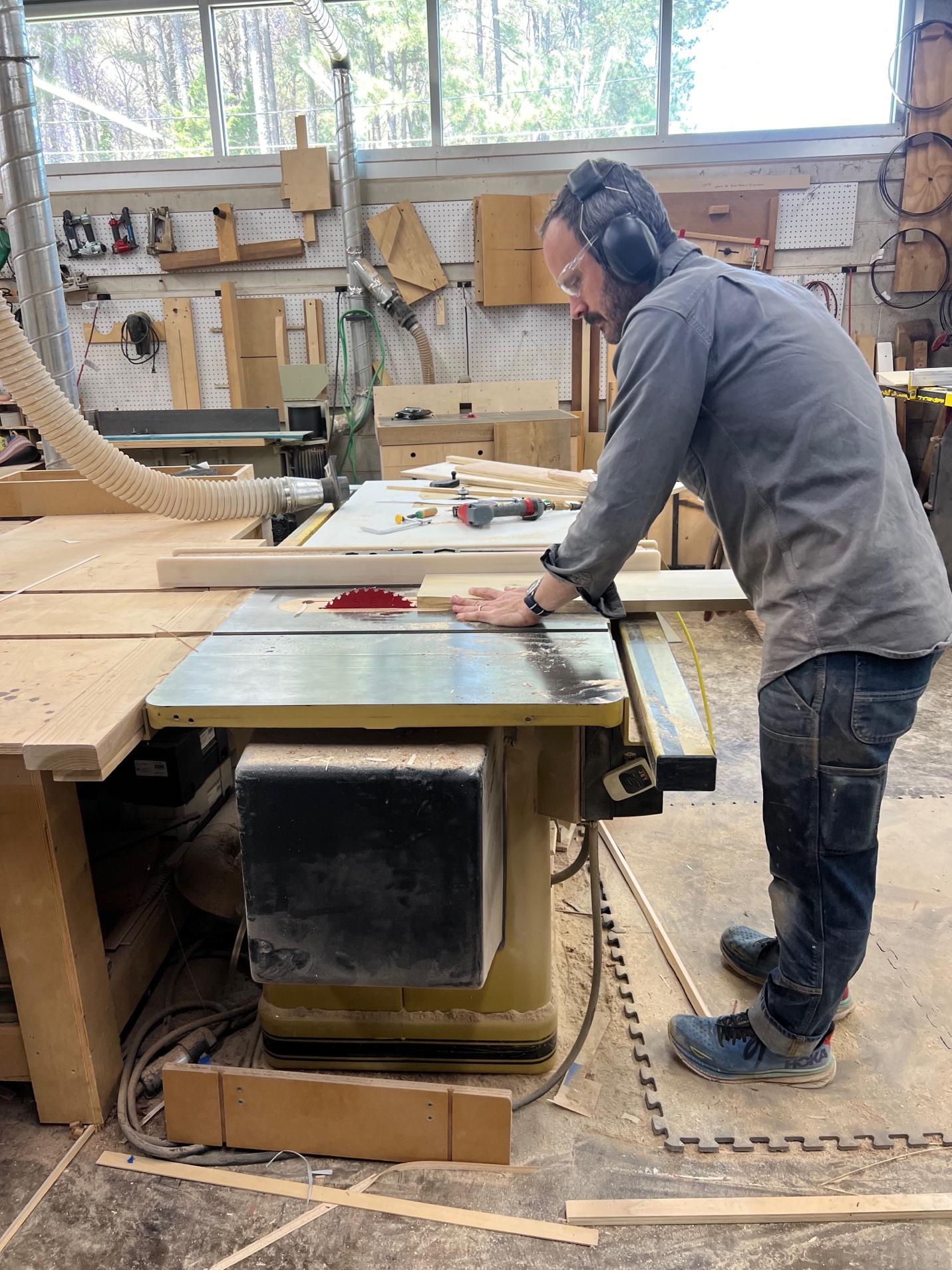
At North Bennet Street, he continued to practice his scales, this time with 18th– and 19th-century construction associated with classical New England furniture. These traditions are considered by many to be the pinnacle of furniture design, and they gave Evan a strong technical foundation and proficiency with hand tools that is integral to his practice today. The program pedagogy was largely based around recreating classic designs, which Evan appreciated, but he admits he was drawn to push beyond the rote training: “I was always interested in tweaking things to my tastes.”
At North Bennet Street, Evan also met his wife, fellow craft furniture maker Meredith Hart. Nearing graduation from their program, the two decided to take a road trip to explore where they would relocate to pursue their design careers. North Carolina became a natural fit for several reasons. It was great luck that Evan and Hart found accessible studio space in Carrboro, not too far from where Evan’s sister lives. The couple also found a rich history of furniture making in North Carolina that resonated with their technical background in Boston. In the mid-20th century, the state saw a huge growth in industrial scale production of colonial-era revival furniture design. The manufacturing boom gave North Carolina a regional reputation as one of the nation’s leading woodworking centers, even rivalling the storied tradition in New England.
Today, most of that manufacturing has died out, but the cultural association between North Carolina and woodworking remains. “People will still email me through my website and be like, ‘I was Googling North Carolina furniture maker, because that’s where the good stuff is made!’” Evan explains. He doesn’t always point out that his boutique practice is a stark contrast from the state’s manufacturing heyday: “I don’t need to educate them that what I’m doing is totally different from what made North Carolina famous for furniture but I’m happy to benefit from the association.”
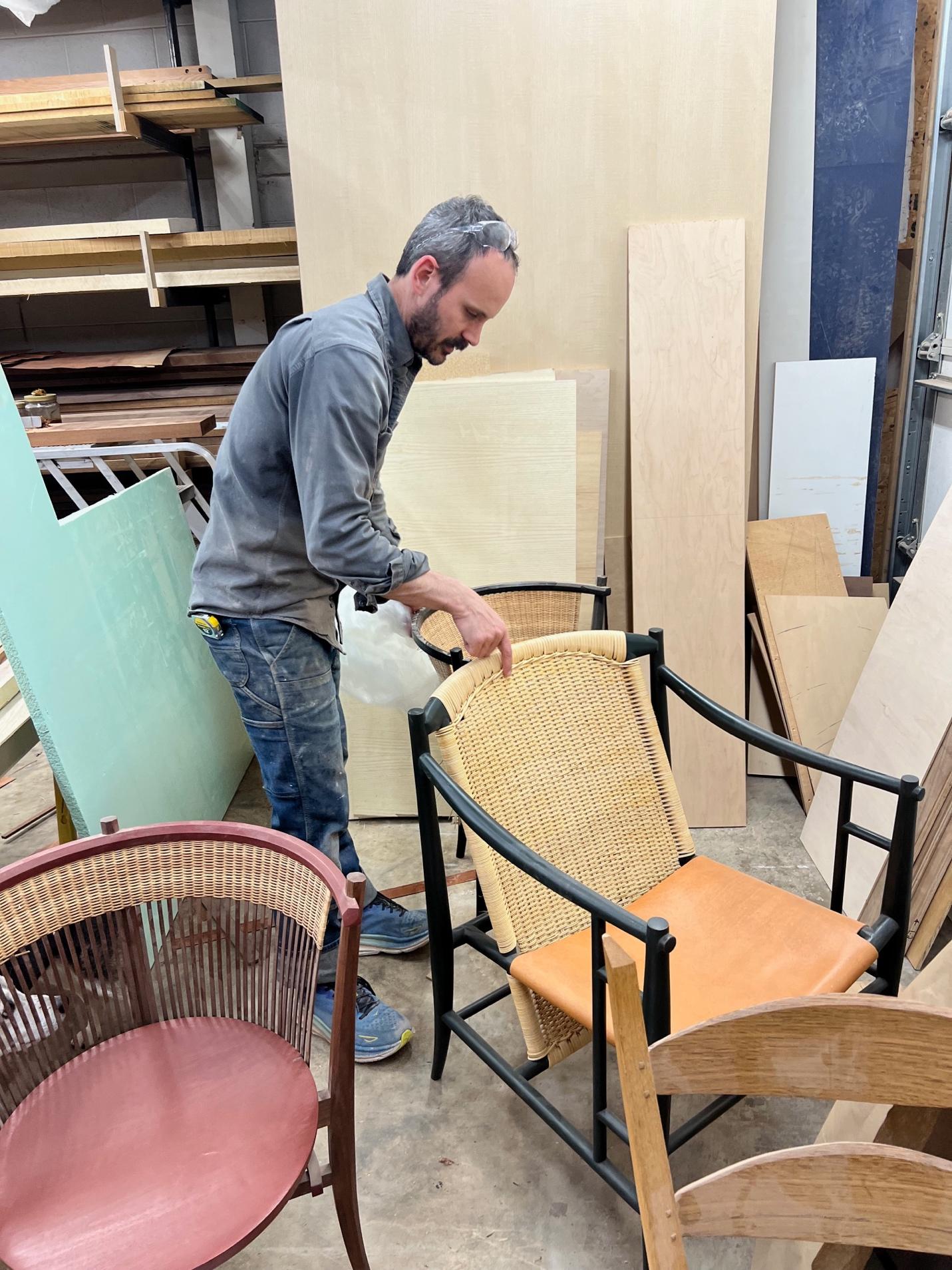
Indeed, having spent more than a decade in North Carolina, Evan resists the label as a “North Carolina furniture maker.” His design influences are varied, and he is constantly learning and exploring, never boxed in by the strictures of a single aesthetic tradition. “I think because I largely build with pretty traditional joinery and methods and construction techniques that influences the overall flavor,” he observes. But at the same time, his drive to innovate and experiment means that his products are rarely the same. “I like to look at a lot of different stuff and build in a lot of different ways, within a lot of different styles. I guess that variety is very energizing. I really don’t like making things multiple times. I just finished a bed that I’ve made, like, four times, and that’s almost as much as I’ve made anything.”
His technical background is rooted in the Shaker and Federalist traditions that he learned in Boston, but his pieces are distinctly modern. Evan jokes that clients, crudely expressing their amazement at his classically-inspired contemporary designs, will say “Wow, it’s really like, old furniture, but new!” His resistance to dogma allows him to explore different furniture design traditions—even different arts and crafts like pottery and textiles—and implement new ideas. “I can look at most any period, and zero in on things I like, which I think is what kind of creates a lot of versatility in my design language.”
Evan’s independent business model is built around collaborative relationships with clients. The interpersonal aspect of custom-making can be a challenge, Evan admits. “A lot of people don’t want to do it, and don’t have the patience for just the inherent back and forth-ness with clients.” But Evan says, “I tend to actually enjoy it for the most part.” Developing designs to match unique home spaces and client tastes serves as a catalyst for his own personal growth. “The details change and what I am attracted to in the aesthetics. I want that to continue to evolve. You have to follow your interests as they reveal themselves to you and then not get bogged down.”
Many of his works—especially the ambitious and technically complex pieces—are labors of love that can take several months to complete. The process is physically, creatively, and interpersonally demanding. Evan jokes that furniture production can mimic the trauma of bringing a new life into the world. “I’ve never had a baby, but they talk about after having a baby there’ll be this endorphin or whatever chemical release in the brain that you almost forget what you just went through. Because, you know, who would want to go through that? You forget that so you can do it again. I feel like a lot of times I make these complicated pieces and I’ll look at them. How did I do that?” Evan knows how to build and also knows when it’s time to forget, so he can pick back up again and continue his creative evolution for the next project.
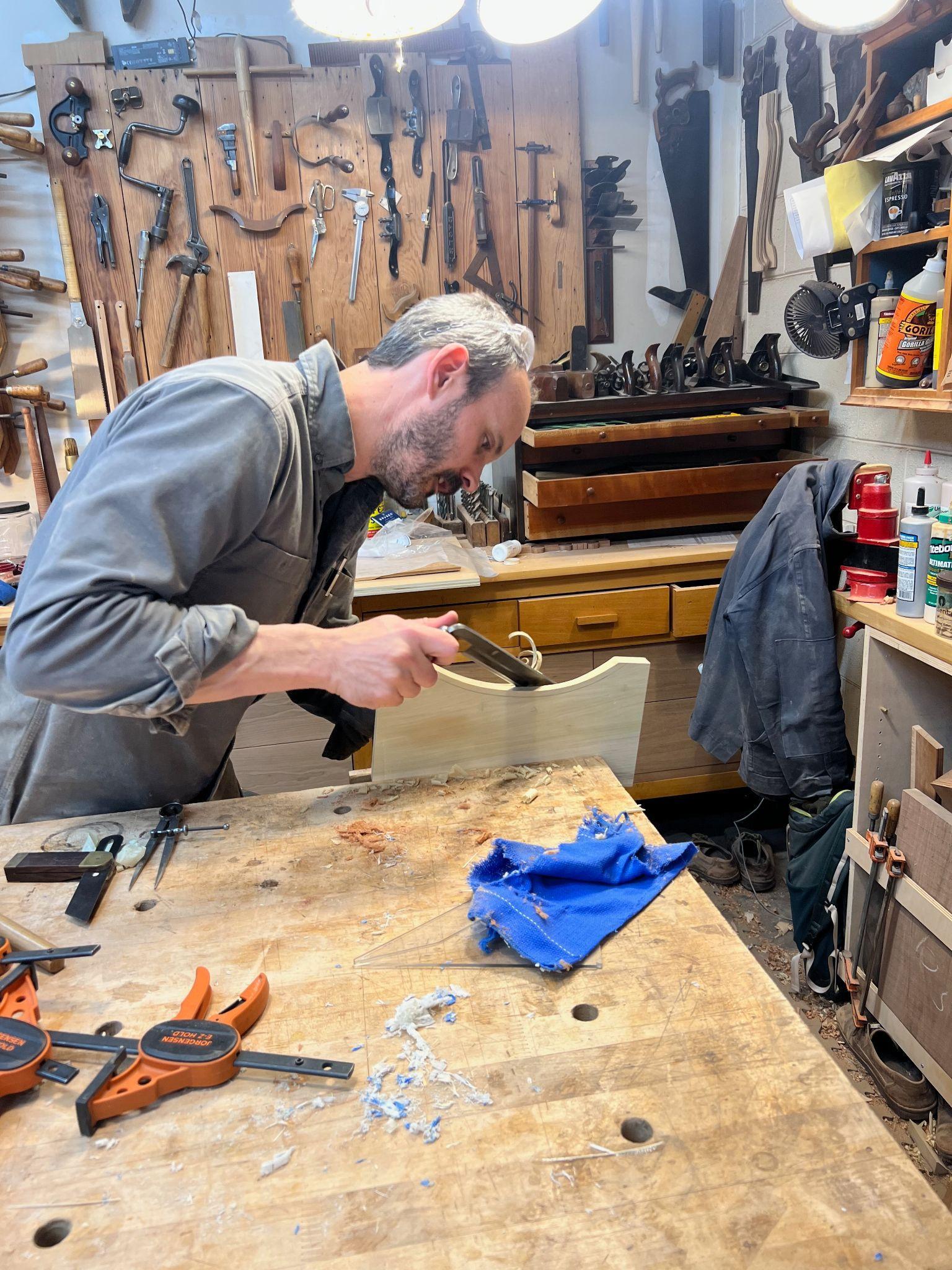
Visit Evan Berding’s website at evanberding.com

This profile is part of a special collaboration between the North Carolina Folklife Institute and Dr. Ben Bridges’ “Writing Material Culture” folklore course at UNC–Chapel Hill (Spring 2025). “Material culture” refers to the objects, tools, artistry, and everyday items that people make and use—and the stories those objects carry forward. Inspired by our shared commitment to community-centered storytelling, students spent the semester documenting the work, perspectives, and ongoing creativity of living North Carolina artists. Each student spent the semester learning to write about material culture through hands-on ethnographic research, culminating in these profiles published as part of NCFI’s Carolina Life & Lore series.